Types of Land Ownership in Uganda
A simple guide to Mailo, Freehold, Customary, and Leasehold land systems in Uganda.
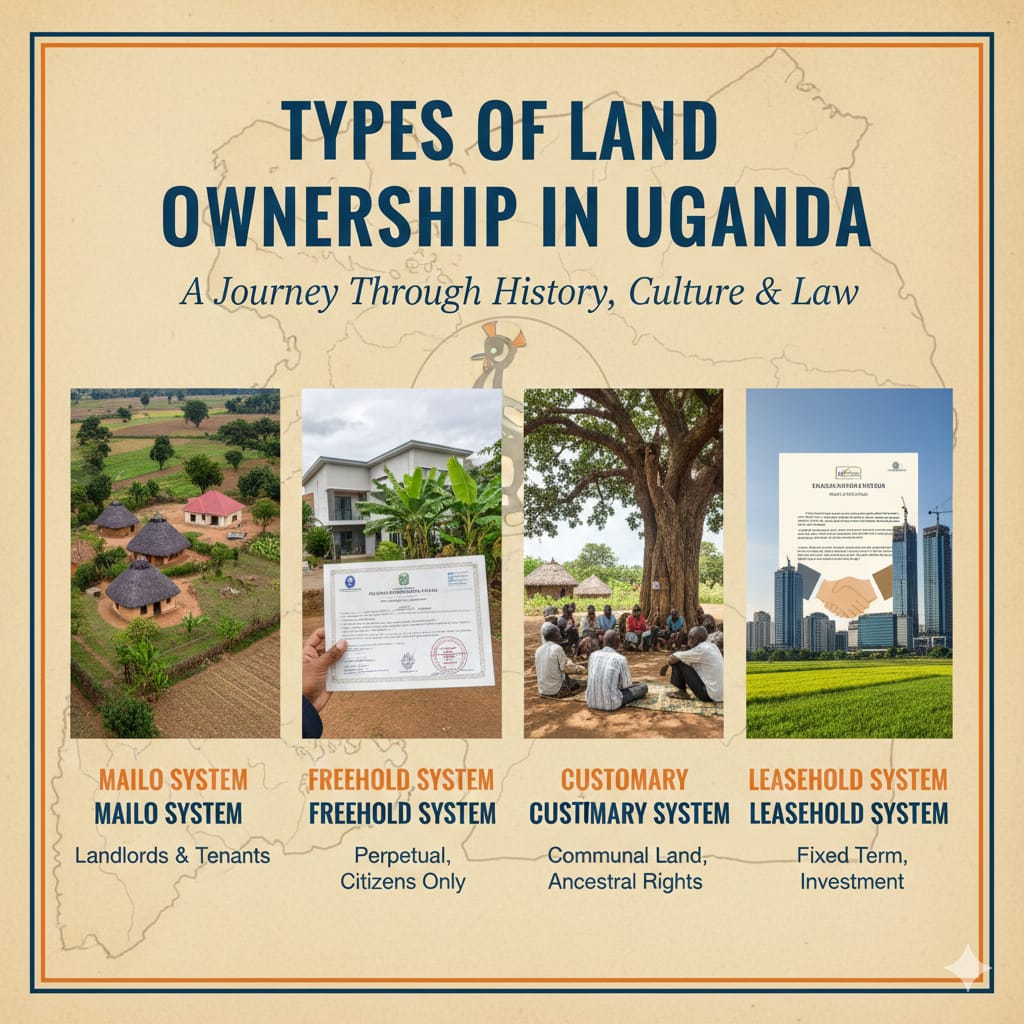
1. Mailo Land System
Mailo land is a type of land ownership where a person owns the land forever, but there may be tenants living on it. The word “Mailo” comes from “mile,” because the land was first measured in square miles. This system is common in Buganda and some parts of Western Uganda.
Key Facts
- There is a landlord (Mailo owner) and tenants who have the right to live and use the land.
- The owner holds the land permanently and can pass it on to their children.
- Tenants must pay a small ground rent as required by the Land Act.
- Both the landlord and tenants have rights protected by the Constitution and the Land Act.
2. Freehold Land System
Freehold land gives the owner full and permanent rights over the land. The owner can use it, sell it, lease it, or pass it on to their family without any time limit.
Key Facts
- The owner has complete control and security over the land.
- A freehold title is strong legal proof of ownership.
- Only Ugandan citizens can own freehold land. Foreigners can only get a lease on freehold land.
3. Customary Land System
Customary land is owned and managed according to the traditions and customs of a community. It is common in rural areas and is usually controlled by families or clans.
Key Facts
- Land is often owned by a clan or family, but individuals may have rights to use certain plots.
- Ownership is usually not written down, but the community recognizes who owns what.
- You can apply for a Certificate of Customary Ownership to get legal proof.
- Land is normally inherited and cannot be sold outside the community without clan approval.
4. Leasehold Land System
Leasehold land is where a landlord gives someone the right to use the land for a specific number of years, usually in exchange for rent. This is common for businesses, institutions, and foreigners.
Key Facts
- The lease period is fixed, usually between 49 and 99 years.
- When the lease ends, the land goes back to the landlord unless the lease is renewed.
- The lease agreement explains the terms, conditions, and fees.
- This is the main way foreigners and foreign companies can legally access land in Uganda.